


Course library

What AML is and the three main risks (laundering the proceeds of crime, terrorist financing, international sanctions). Client identification and KYC checks. Clients with a risky profile. Recognizing suspicious transactions. International sanctions in practice. Real-life situations and reporting procedures.
- Module 1 – PivotTables, analysis limits, building a dashboard
- Module 2 – The data model, the DAX language
- Module 3 – Importing data from CSV files, transformations
- Module 4 – Importing from databases, data sources, relationships
- Module 5 – Importing data from reports, transformations
- Module 6 – Measures, advanced DAX functions
- Module 7 – PivotCharts, data visualization

4 client types based on the combination of satisfaction and loyalty (Apostle, Mercenary, Hostage, and Terrorist). For each type: how to recognize it, which strategy to choose, what to avoid.

What makes debt collection different. The qualities you need for debt collection. The most common mistakes in debt collection. Negotiation styles and virtual negotiation. Self-assessment exercise: What is your negotiation style.

5 modules: Preparing for the Meeting, Needs and Potential, Proposing a Solution, Objections and Closing the Deal, Follow-Up and Referrals. Interactive training with four realistic clients. Client typology.
Block 1: Copilot as your personal analyst and researcher
We spend a great deal of our working time looking for information. This block teaches participants how to cut that time to a minimum.
- Information essentials: What a user needs to know in order to work with AI effectively and safely, without hours of training.
- Enterprise Search: How to pull facts out of the hundreds of emails and documents you have access to, without having to open them.
- Prompting for business: How to assign tasks with clear context (for example, Act as a legal consultant and compare these two versions of an NDA).
- Summarizing long threads: An instant briefing from an email conversation with 20+ messages – who promised what and what the deadline is.
- Copilot Pages: Building shared knowledge bases for project teams directly from chat output.
- Standard or premium: What the standard and premium versions of Copilot can and cannot do, and how to choose the right one.
- 2. Block: Managing meetings and communication (Teams & Outlook)
An end to endless meetings and writing up minutes. Let us use AI to speed up and simplify the work.
- Meeting Efficiency: How to use Copilot to moderate a discussion (What have we not covered from the agenda yet?) and to produce an instant summary for those who could not join.
- Action Items: Automatically generating tasks in Planner/To Do directly from the meeting context.
- Work email: Turning terse bullet points into a professional, diplomatic email to a client – and the other way around, summarizing an aggressive email into factual points. How to use AI for replies that are fast and still substantive.
- Coaching: Let AI check your email before you send it – Do I sound too confrontational?
- 3. Block: Automating documentation and reporting (Word & Excel)
Focused on preparing materials for management and analyzing data without having to know a single function.
- Word: Creating first drafts of policies, reports, and proposals based on internal templates and data from other files.
- Excel for managers: Create a PivotTable of sales by region and show me the TOP 5 most profitable products – visualizations and trends in plain language.
- Data cleansing and checking: Quickly fixing inconsistent data in tables (date formats, names, duplicates) using natural language.
- Cross-document analysis: Find every number in this Word document that does not match the table in Excel.
- 4. Block: Professional presentations, AI agents, and other M365 tools
How to present results upward and how to build your own workflow.
- PowerPoint: Transforming a Word document (for example, an annual report) into a professional 10-slide presentation with a consistent visual style.
- Custom agents: A practical demonstration – creating an agent over the Employee Handbook, where an employee asks about benefits and the agent answers solely on the basis of internal rules.
- Compliance & Security: An explanation of why Copilot is safer than the public ChatGPT (data stays within the company tenant).
- Best practices for team rollout: How to share the best prompts among colleagues to keep output quality consistent.
- Module 1: The Power Platform
- Module 2: Building flows
- Module 3: The data model
- Module 4: Designing the automation
- Module 5: Using Power Automate in an approval process
- Module 6: A flow triggered by a button
- Module 7: Scheduled automation
- Module 8: Triggering automation with events
- This course focuses on working with Power Automate; participants go through the entire life cycle of building a process in the Power Automate environment.
- During the course we will design the automation of a sample process, try out different triggers, look at the actions available in Power Automate, and connect several services to our process. Among other things, the result will be an automatic approval process configured to respond according to defined conditions.


5 chapters: Communication Specifics in Debt Collection, Levels of Debt Collection, Debtor Manipulation, Debtor and Collector Typology, Hot Spots. More than 30 practice calls, self-assessment tests, and an audio game. A virtual gym for your debt collection muscles.

The basic debtor types. How different debtor types manipulate and which strategy to choose. Test: What type of collector are you. The basic collector types. How debtors and collectors of different types get along.

The consequences of manipulation. 6 types of manipulation, with recognition in real calls. How (not) to react to manipulation. Signs of lying in voice and content. How to respond to a lie.

Preparing the feedback conversation, Opening (icebreaking, authenticity, shared goal), Dialogue (open questions, argumentation, development prompts, clear communication), Agreement, Conclusion, and Goal. The 5 most common traps: Manipulation, Relativization, Anticipation, the Sandwich Method, and Too Much Criticism.

The difference between hearing and listening. An analysis of three calls where listening failed. Rules of good listening: concentration, acknowledging, encouraging with relevant questions, summarizing along the way, responding to information, and giving space.

Objections on the phone: why they arise and what lies behind them. The 3 main forms of objections: Rejection, Concern, Inquiry. Motives behind objections. Time-limited practice on real calls.

The importance of feedback and how to give it. Common mistakes and specific situations. An interactive conversation simulator. How to teach your team to give feedback. Insights from experienced managers and a coach.

An interactive simulator for giving feedback to a colleague who treats you with mild arrogance. Feedback on your decisions and choices.

A self-assessment test across key areas to determine your starting position. What feedback is, how to give critical and positive feedback. The I-MESSAGE technique, the structure of the conversation, adapting to personality. Habit building with challenges (a thank-you board, a feedback impact journal, the Ten Commandments of Feedback, phrasing tailored to personality type, real-life examples). A community for sharing experiences.

A self-assessment test across key areas to determine your starting position. What feedback is, how to give critical and positive feedback. The I-MESSAGE technique, the structure of the conversation, adapting to personality. Habit building with challenges (a thank-you board, a feedback impact journal, the Ten Commandments of Feedback, phrasing tailored to personality type, real-life examples). A community for sharing experiences.

Different types of feedback and when to give it. The specifics of home office. Quick feedback (both critical and positive). The structure of a feedback conversation.

Communication traps and other pitfalls. How to handle specific and difficult situations when giving and receiving feedback.

Feedback and what it can address. Changing your attitude toward giving and receiving feedback. The noise and barriers that distort it.

Communication and other traps in feedback, with a practical series of activities and exercises.

Fire and Fire Suppression (what a fire is, types of fire, extinguishing agents and extinguishers, their placement, operating a fire extinguisher) and First Aid and Evacuation (smoke, calling the fire department, evacuation step by step). Final quiz, followed by a certificate.

Fire and Fire Suppression (what a fire is, types, extinguishing agents and extinguishers, how to operate them) and First Aid and Evacuation (smoke, calling the fire department, evacuation step by step). With emphasis on the obligations of managers. Final quiz, followed by a certificate.

Forget the theory. Through interactive videos, quizzes, and illustrated guides, you will learn to act in a critical situation. Whether it is a sudden collapse, choking, or an injury at home, at work, or on the street. You will learn to make decisions quickly and with confidence. All at your own pace in a safe environment, with the option to return to the lessons for a full year. Upon successful completion, you will receive a certificate.

Fear gives way to confidence. Learn to save what matters most through instructional videos, texts, and quizzes that prepare you for situations ranging from an inhaled toy to a high fever. Study at your own pace and in your own time, with the option to return to the lessons throughout the year. You will gain valuable advice for life as well as a certificate of completion.

What communication is and is not. The three components of communication: verbal, nonverbal, and paraverbal. Practice on a sample lecture. Paraphrasing and how to capture both content and emotions. Paraphrasing practice in 6 interactive situations. The Ten Commandments of Paraphrasing.

What is and is not personal data. Special categories of data and the strict prohibition on their processing by ordinary employees. Roles in the process: data subject, controller, processor. Legal bases for processing. Practical security measures. Incident reporting. A downloadable cheat sheet with the 10 most common pitfalls.

A conflict call with a debtor. Strong call openings and closings. The 'don't push and don't correct' rule. What to say first and what later. Say it neutrally. Words matter. Calm the situation by agreeing. Preparing for objections. Anchoring words. Hidden messages (reading between the lines).

How to get the team on board with giving feedback. Tips from practice. Reasons and benefits for you and your employees. How the younger generation responds to feedback. Receiving critical feedback in the role of manager. Practicing how to accept uncomfortable objections.

Gen Z strengths (technology, creativity, speed) and how to leverage them. A Gen Z dictionary. How to motivate Gen Z: purpose, flexibility, development, the company's broader impact, and only then money and benefits. Giving feedback and assigning tasks. Interview with Lucie Ráčková (Forbes 30 Under 30).

The 4 leadership styles (directive, consultative, consensus-based, delegating) at a glance, with guidance on when to use each. Consultation and consensus in practice. When it is better to delegate, and to whom. Four interactive model situations including feedback.

Model situations set in a manufacturing environment (shipping hall, warehouse). The 4 leadership styles (directive, consultative, consensus-based, delegating) at a glance, with guidance on when to use each. Consultation and consensus in practice. When it is better to delegate, and to whom.

The satisfaction pyramid: the factual, procedural, and personal levels. How to increase client satisfaction.
Chapter 1: Getting to know MS Access
- MS Office versions – boxed vs. 365 vs. online
- Finding your way around the MS Access environment
- View options
- Basic environment settings
Chapter 2: Access basics
- The parts of MS Access
- What a database is
- Database design rules
- Primary and foreign keys
Chapter 3: Tables
- Creating tables and entering data
- View types and working with them
- Table design
- Data types and their options
Chapter 4: Queries
- Relationships
- Creating a query
- Types of queries
- Advanced queries
Chapter 5: Forms
- Creating a form
- View types
- Editing a form
- Subforms
Chapter 6: Reports
- Creating a report
- View types
- Editing reports
Chapter 7: Macros
- Creating a macro
Chapter 8: Code
- Writing VBA code
- Advanced formatting (preserving and clearing formats, conditional formatting, custom formats)
- Extended copy and paste options
- Formulas – principles and relative/absolute referencing
- Selected functions – logical, text, date, math, and conditional calculations
- Worksheet and workbook protection
- Working with databases – Excel tables, sorting, filters, splitting text
- PivotTables and PivotCharts
- Microsoft Copilot in Excel
Chapter 1: Forms
- Form controls
- Source data for form controls
- Formulas for forms
- Securing forms
- Data protection
- Inserting objects from other applications
- Linking controls to macros
Chapter 2: Introduction to macros
- Recording a macro
- Running a macro
- Editing a macro
- Assigning a macro to an object
On completing the course, participants will be able to:
Create, configure, and modify forms in MS Excel.
- Differences between recording and programming macros
- Relative and absolute recording with usage examples
- Running macros via keyboard shortcuts, buttons, and toolbars
- VBA Editor – navigating code, branching, and conditions
- Creating custom functions and their limitations
- User dialog boxes (MsgBox, InputBox)
- Handling runtime errors and macro security
- Sharing macros with users via PERSONAL.XLS
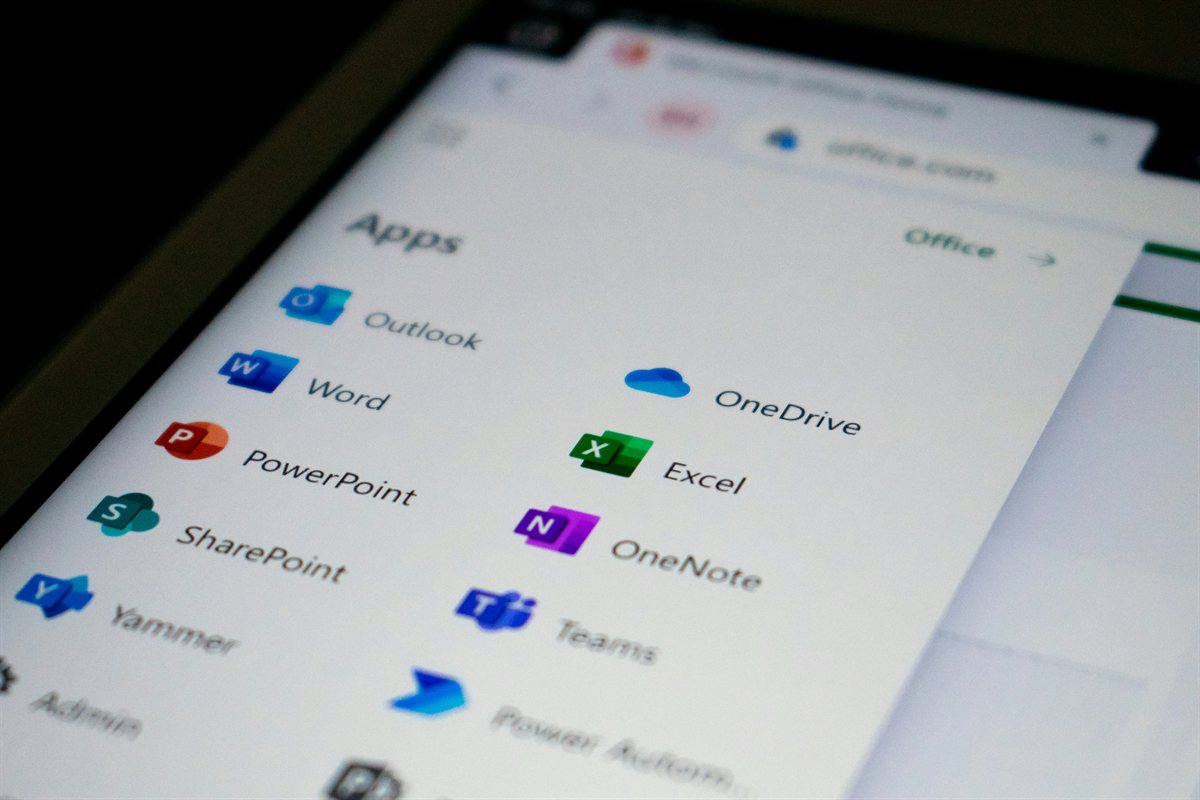
- Introduction to the cloud environment and Office 365 services
- Communicating via Outlook Web App (email, calendar, contacts, tasks)
- Collaboration features in Teams
- Word, Excel, PowerPoint, and OneNote online apps
- OneDrive personal storage and file sharing
- Getting around SharePoint Online and managing documents
- Configuring document libraries, managing folders, versioning, and external sharing
- Overview of additional services
- Introduction to MS Outlook and the basics of the interface
- Creating and sending emails, message options, flags, categories, creating a signature
- Calendar events, meetings, rooms, resources, and shared calendars
- Creating contacts and distribution lists
- Assigning and tracking tasks
- User rules, out-of-office assistant (automatic replies), Quick Steps
- Delegation and access permissions
- Email security, digital signatures, and encryption
- Configuring an MS Exchange profile and archiving data
- Public folders
Day 1 – Architecture and the data model:
- The Power BI ecosystem, workflow, connectors, Navigator
- Power Query transformations, data cleansing, unpivot, merging
- Data modeling, relationships, dimensions, fact tables, star schema
- DAX fundamentals, calculated columns vs. measures, aggregations, filter context
Day 2 – Analysis, visualization, and distribution:
- The CALCULATE function, time intelligence, VAR/RETURN
- Storytelling, choosing the right charts, interactivity, formatting
- Slicers, filters, drill-through, tooltips
- Publishing, dashboards, Row-Level Security, data refresh
Chapter 1: Getting to know MS PowerPoint
- The difference between MS Office on-premises and MS Office 365
- Finding your way around the MS PowerPoint environment
- View options
- Basic environment settings
- Basic file types
- Starting and closing the application, creating a new presentation
Chapter 2: Working with text
- The outline and its advantages
- Text boxes
- Formatting text
- Lists in text boxes
Chapter 3: Working with pictures and other graphic objects
- Inserting pictures from a file
- Clip art
- Editing pictures
- Tables and charts
- Diagrams
Chapter 4: Working with multimedia
- Audio
- Video
- Photo album
Chapter 5: Giving the presentation a consistent look
- Replacing fonts
- Headers and footers, slide numbers
- Themes and slide masters
- Presentation template
Chapter 6: Preparing the presentation for delivery
- Slide transitions
- Object animations
- Slide timings
Chapter 7: Printing the presentation
- Printing individual slides
- Printing handouts
- Printing notes
Chapter 8: Exporting the presentation
- Saving to PDF and exporting slides
- Packaging the presentation to go
On completing the course, participants will be able to
- Find their way around the MS Office PowerPoint environment
- Create, save, and open presentations
- Insert and work with text, graphic, and multimedia objects
- Create a consistent look and presentation templates using themes and slide masters
- Set slide transitions and object animations
- Copy slides between presentations, adapting the look to one or the other
- Prepare handouts for printing presentations
- Export presentations to other formats
- Introduction to MS Teams (versions, interface, view options, settings)
- Teams basics – permissions, user types, sharing data
- Chat and personal messages
- Creating teams, managing members, team settings, and team chat
- Calendar, viewing events, and organizing meetings
- Calls – making calls, view options, adjustments
- Sharing files via OneDrive and SharePoint, managing permissions
- Additional tools and service integrations
- Chapter 0 – Leveling the playing field: basic document handling, typing conventions, inserting objects
- Chapter 1 – Editing text formatting: preserving/copying/clearing formats, tabs, indentation
- Chapter 2 – Working with styles and templates: built-in styles, custom styles, copying, templates
- Chapter 3 – Reusing objects: AutoText, custom headers/footers, Quick Parts
- Chapter 4 – Working with tables: creating, formatting, converting, sorting, repeating header rows
- Chapter 5 – Numbered items: footnotes, cross-references, captions, lists, table of contents, index
- Chapter 6 – Editing longer documents: find and replace, sections, column layout, tracked changes, translation
- Chapter 7 – Mail merge: envelopes, labels
- Getting around MS Word and configuring the interface
- Working with files (creating, saving, opening, searching)
- Basics of working with documents and text
- Formatting text and paragraphs – fonts, paragraphs, bullets, numbering
- Inserting objects (pictures, shapes, SmartArt, equations, symbols)
- Page layout settings, spell check, and preparing for printing
- Introduction to styles, headers and footers, page numbering
- Leveling the playing field: text formatting rules, style basics, Quick Parts, building blocks, sections
- Outline view: outlining tools, subdocuments, master documents, formatting large documents
- Special headers and footers: AutoText in headers, chapter-based headers, multi-section documents
- Special templates: color schemes, preparing building blocks, form fields, document automation
- Workshop: hands-on help with participants' own templates and documents

Sources of information about the client (website, social media, referrals, internal data). What to read from the meeting environment (office, cafe, client's home). How to dress: rules and variations for different clients.

How to read the environment in which the meeting takes place. How to open the conversation and which questions to use. How to lead the conversation so you find out as much as possible. How you can ruin the meeting right at the start.

Handling objections: types, procedures, recommended phrasing. Using emotions and stories in selling. Responding according to the client typology (Apostle, Mercenary, Hostage, Terrorist). Specific closing techniques.

Occupational health and safety: Alcohol and safety at work, employee rights and obligations in OHS, risk prevention, workplace injuries, and safety signs. Final certificate upon successful completion.

Occupational health and safety: Alcohol and safety at work, employee rights and obligations in OHS, risk prevention, workplace injuries, and safety signs. Final certificate upon successful completion.

How to take care of the client after the meeting. Which information to record and where to keep it. What to do when the deal stalls or falls through. Working with referrals from existing clients.
Block 1: Connecting to data and first contact
The starting point is understanding that Power Query is not Excel – the import is automated, data is pulled in from elsewhere, and everything can be edited and changed. Data is unified and safe from unwanted changes.
- Data sources: Connecting to Excel, CSV, a folder (importing all files at once), and a SQL database.
- Data types: Why it is critically important to set the correct data type (Text, Whole Number, Date) right at the start.
- The interface and steps: How the applied steps history works and how to go back through it or edit steps.
- 2. Block: Cleaning and transformation
This is where 80% of the work happens. The goal is to get the data into the shape of a narrow, long table.
- Preparing the data model: Defining the information need and identifying which data is needed and which is redundant.
- Removing noise: Deleting blank rows, duplicates, and unnecessary columns.
- Transforming text and numbers: Split Column, text extraction, and basic math operations.
- Working with dates: Extracting the year, month, or day name without writing formulas.
- Conditional columns: If-Then logic in a graphical interface (for example, categorizing customers by revenue).
- 3. Block: Combining and reshaping
How to turn many tables into one working whole.
- Append Queries: Stacking tables one below another (for example, data for January, February, and March into a single report).
- Merge Queries: The equivalent of VLOOKUP/XLOOKUP, but far more powerful. An explanation of the join types (Left Outer vs. Inner Join).
- Unpivot Columns: An absolutely essential technique – how to turn a wide table (with months in the column headers) into a narrow table suitable for Power BI.
- 4. Block: Advanced techniques and automation
A look under the hood that separates beginners from professionals.
- Parameters: How to build a dynamic report where the user only changes the folder path and everything recalculates.
- Introduction to the M language: How to read the formula bar and make small manual edits that you will not find in the menus.
- Loading Options: The difference between Close & Load into Excel vs. Only Create Connection vs. loading directly into the data model.
- Optimization: How to keep a query from taking forever to refresh (Query Folding – a brief explanation).

Sources of information about the client (website, social media, referrals, internal data). What to read from the meeting environment (office, cafe, the client's home). How to dress: rules and variants for different clients.

The difference between a feature, an advantage, and a real benefit for the client. How to catch buying signals (verbal and non-verbal). When to stop presenting and ask for the deal.

An interactive knowledge game in the style of the TV quiz show Jeopardy! Participants choose questions from various cybersecurity categories (safe online behavior, passwords, social media, fraudulent e-mails, and more) and collect points for correct answers. Question difficulty and topics are adapted to the junior target group.

An interactive knowledge game in the style of the TV quiz show Jeopardy! Participants choose questions from various cybersecurity categories (phishing, fraudulent e-mails, secure passwords, social media, online banking security) and collect points for correct answers. Question difficulty and topics are adapted to the senior target group.

5 main chapters: THINK (warning signs, how fear works, your safety net, listening to yourself, emotional/time/physical boundaries), SHOUT (assertive communication without escalation), RUN (ending a dangerous situation in time, not overloading yourself with chronic stress), FIGHT (self-defense options in extreme situations), SHARE (when and how to report a situation, a safe company culture). Interactive activities and simulators.

An interactive call simulation with two clients, practicing how to choose the right responses and arrange a meeting.
5 modules: Psychology of Telephone Communication, Specifics of Telephone Communication, Structure of a Phone Call, Audio Simulations, and Set Up a Meeting. A simulated call in which you arrange a meeting. Working with SMART goals for phone calling.
Client types and which type you fall into. Choosing a communication style based on the client type. Authenticity on the phone and how much of yourself to bring into the call. SMART goals in phone calling. Coping with rejection and recharging your energy after an unsuccessful call.
How to work with contacts: segmentation, priorities, record keeping. When it is best to call. Objections such as 'I don't have time / send me an email / I'm not interested' and how to handle them. Everything to record after the call.
What impression the client takes away from the call and how to influence it. Working with voice, intonation, and speaking pace. Gestures and posture on the phone (even though the client cannot see us, the voice gives it away). Active listening and reading between the lines.
What to prepare before the call. How to open the call and capture the client's attention. How to continue and when to move toward the goal. The pitfalls of talking too much. How to close the call professionally.

What a buying signal is (verbal and non-verbal). Model situations from the sales floor: how to recognize the signal and how to respond to it. Closing techniques: direct question, alternative question, summary of benefits. Why salespeople are afraid to close and how to overcome that fear.

Pre-Trip Preparation (vehicle check, documents, fitness to drive), Safe Behind the Wheel (driving principles, speed, following distance, overtaking), Traffic and Emergency Situations (adverse conditions, technical failures, aggression), Traffic Accident (what to do, documentation, obligations). Certificate upon passing the final quiz.

Three types of questions (closed, open, alternative) and when to use them. The communication funnel. Model situations from the sales floor. Levels of listening quality, from ignoring to empathetic listening. Active listening techniques: paraphrasing, mirroring, summarizing, encouraging.

What upsell and cross-sell are, with concrete examples. Comprehensive selling vs. step-by-step (incremental) selling. Model situations from the sales floor. Practical tips: offer meaning, not things; ask before recommending; be specific and concise; read the customer's signals.

What the verbal component of telephone communication is and how strongly it shapes the impression of a call. Words and phrases that get in the way. The vocabulary of a professional phone agent and how to replace common traps with positive phrasing.

A personal test of your home-office style. How to structure your day and stay focused. How to separate work from personal life. How not to forget rest and movement. Interactive simulators and 3 challenges with a commitment.

The rule of the idea in 3 points. Shortening text without losing meaning. Removing words and phrases that dilute the message. How to structure a message so that the recipient understands it on the first read.
Geographic and territorial terms. Holidays and seasons. Names of streets, squares, and municipalities. Institutions, companies, documents, and the Collection of Laws.
Commas with forms of address, embedded clauses, and appositions. When to put a comma before the conjunctions 'než', 'jako', 'nebo', 'ani'. Multiple subjects and comparison. Hands-on practice.
7 games focused on spelling and grammar (i/y, s/z, mě/mně, commas, capitalization, forms of address) and 7 games on the form of expression (brevity, style, vocabulary, typography, the message, foreign words, handling attacks, miscellaneous). Opening and final challenge to measure progress.
Final quiz across all topics in the course. Comparison with the opening challenge. Evaluation of progress and areas for further development. Downloadable certificate of completion.
Corporate abbreviations and anglicisms (KPI, deadline, meeting, brief). Words borrowed from Latin and other languages. Declension of foreign words in Czech. When it is a good idea to replace a foreign term with a Czech equivalent, and when it is better not to.
Masculine declension patterns and sub-patterns (e.g., hoch, paňáca). Masculine surnames with multiple forms. Female surnames in their non-feminized form. Video with the most common embarrassing mistakes.
How to respond to anonymous criticism on social media. The structure of a reply to a complaint. What to do about verbal attacks in written form. Practical examples and sample wording.
Subject-predicate agreement. Memorized word lists in practice. Foreign words and linguistic peculiarities. Downloadable materials.
The pronoun já in all cases. Tips on using a check question to help yourself. Other commonly misspelled words containing mě/mně.

Valuable advice for every written message. Pitfalls and trick questions that are often overlooked in standard Czech language references. Practice on the details that make the difference between professional and amateur writing.
Opening test across all written communication topics. Introduction to the chatbot guides who accompany you throughout the course. Recommendations on which chapter to start with based on your results.
How to phrase information so that it does not needlessly irritate. Escalating messages from a request through a call to action to an urgent reminder. Rules for positive and negative messages. Practice on specific workplace situations.
The prepositions s/z and the rules for writing prefixes: when they express coming together, movement from top to bottom, or away from a surface, and when they express a change of state. Words with a tricky spelling tradition.
The structure of a short online message. Rules for brief and to-the-point emails. Subject line, greeting, closing. Tips on how to write so that your email does not turn into a novel.
Abbreviations, academic titles, and company designations. Dates, times, and numeric ranges. Units of measurement, percentages, phone numbers. Rules for dashes, spaces, and punctuation.
Synonyms for the most frequently repeated words. Alternatives to the conjunction 'but', which often needlessly emphasizes the negative. Prohibited and discouraged expressions in business communication. Tips on how not to get swallowed up by corporate jargon.