


Course library

The consequences of manipulation. 6 types of manipulation and how to recognize them in real calls. How (not) to respond to manipulation. Signs of lying in voice and content. How to respond to a lie.

Preparing for the feedback conversation, Introduction (icebreaking, authenticity, shared goal), Dialogue (open questions, reasoning, development suggestions, clear communication), Agreement, Conclusion, and Goal. The 5 most common pitfalls: Manipulation, Relativization, Anticipating, the Sandwich Method, and Too Much Criticism.

The difference between hearing and listening. Analysis of three calls where listening failed. Rules of good listening: focus, acknowledgment, encouragement through relevant questions, ongoing summarizing, responding to information, and giving space.

Objections over the phone – why they arise and what lies behind them. The 3 main forms of objections: Rejection, Concern, Inquiry. Motives behind objections. A timed check on real calls.

The importance of feedback and how to give it. Common mistakes and specific situations. An interactive conversation simulator. How to teach your team to give feedback. Insights from experienced managers and a coach.

An interactive simulator for giving feedback to a colleague who treats you with mild arrogance. Feedback on your decisions and choices.

A self-assessment test across key areas to determine your starting point. What feedback is and how to give critical and positive feedback. The I-message technique, conversation structure, and adapting to personality. Building the habit through challenges (a gratitude board, a feedback impact journal, the Ten Commandments of Feedback, phrasing tailored to personality type, real-life examples). A community for sharing experiences.

A self-assessment test across key areas to determine your starting point. What feedback is and how to give critical and positive feedback. The I-message technique, conversation structure, and adapting to personality. Building the habit through challenges (a gratitude board, a feedback impact journal, the Ten Commandments of Feedback, phrasing tailored to personality type, real-life examples). A community for sharing experiences.

Different types of feedback and when to give them. The specifics of working from home. Quick feedback (critical and positive). The structure of a feedback conversation.

Communication and other pitfalls. How to handle specific and difficult situations when giving and receiving feedback.

Feedback and what it can address. Changing your attitude toward giving and receiving feedback. Noise and barriers that distort it.

Communication and other feedback traps, with a practical series of activities and exercises.

Fire and Firefighting (what fire is, types of fire, extinguishing agents and fire extinguishers, their placement, operating a fire extinguisher) and First Aid and Evacuation (smoke, calling the fire department, step-by-step evacuation). A final test, followed by a certificate upon passing.

Fire and Firefighting (what fire is, types, extinguishing agents and fire extinguishers, how to operate them) and First Aid and Evacuation (smoke, calling the fire department, step-by-step evacuation). With an emphasis on the obligations of managers. A final test, followed by a certificate upon passing.
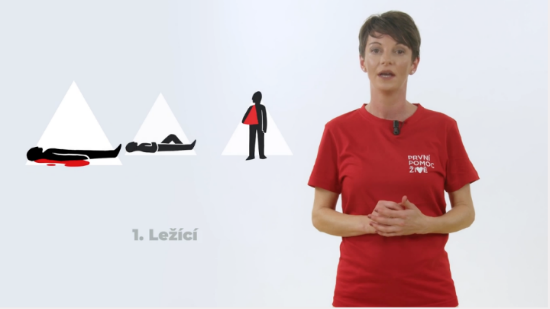
Forget about theory. With interactive videos, quizzes, and illustrated guides, you'll learn to act in a critical situation – whether it's a sudden collapse, choking, or an injury at home, at work, or on the street. You'll learn to make decisions quickly and confidently. All at your own pace in a safe environment, with the option to revisit the lessons for a full year. You'll receive a certificate upon successful completion.

Replace fear with confidence. Learn to save what matters most with instructional videos, texts, and quizzes that prepare you for situations ranging from an inhaled toy to a high fever. Study calmly at your own pace, with the option to revisit the lessons for a full year. You'll gain valuable life skills as well as a certificate of completion.

What communication is and isn't. The three components of communication: verbal, nonverbal, and paraverbal. Practice on an excerpt from a lecture. Paraphrasing and how to capture both content and emotions. Paraphrasing practice in 6 interactive situations. The ten commandments of paraphrasing.

What is and isn't personal data. Special categories of data and the strict prohibition on their processing by ordinary employees. Roles in the process: data subject, controller, processor. Legal bases for processing. Practical security measures. Incident reporting. A downloadable cheat sheet of the 10 most common pitfalls.

A conflict call with a debtor. Strong call openings and closings. The “don’t push and don’t correct” rule. What to say first and what to say later. Say it firmly. Words matter. Calm things down with agreement. Preparing for objections. Anchoring words. Hidden messages (reading between the lines).

How to get your team in the right mindset for giving feedback. Tips from practice. Reasons and benefits for you and your employees. How the younger generation responds to feedback. Receiving critical feedback as a manager. Practicing how to accept uncomfortable objections.